Water Stain on the Ceiling Below the Chimney? Why Flashing Is Usually the Cause
Quick Answer: A water stain on the ceiling near the chimney almost always means the flashing, the metal seal where the chimney meets the roof, has failed and is letting water in. The chimney creates a break in the roof's surface, and flashing is what waterproofs that joint; when it corrodes, pulls loose, or its sealant fails, rain runs down the chimney and into the roof and ceiling. The fix is repairing or replacing the flashing and sealing the joint, not just patching the ceiling stain.
You notice it on the ceiling, a brownish water stain, and when you trace where it is, it sits right below where the chimney passes through the roof. It is a common and telling spot for a leak, and it is easy to worry the whole roof or the chimney is failing. Usually, neither is the case. The culprit is almost always a specific, fixable component: the flashing.
The chimney is one of the most leak-prone spots on any roof, because it interrupts the roof's surface, and the seal around that interruption is what keeps water out. When that seal, the flashing, fails, water finds its way in and shows up as a stain on the ceiling below. Understanding why the chimney joint leaks and why flashing is the usual cause points straight to the right fix, and away from the wrong ones. Here is what that ceiling stain is really telling you.
Why the Chimney Is a Leak-Prone Spot
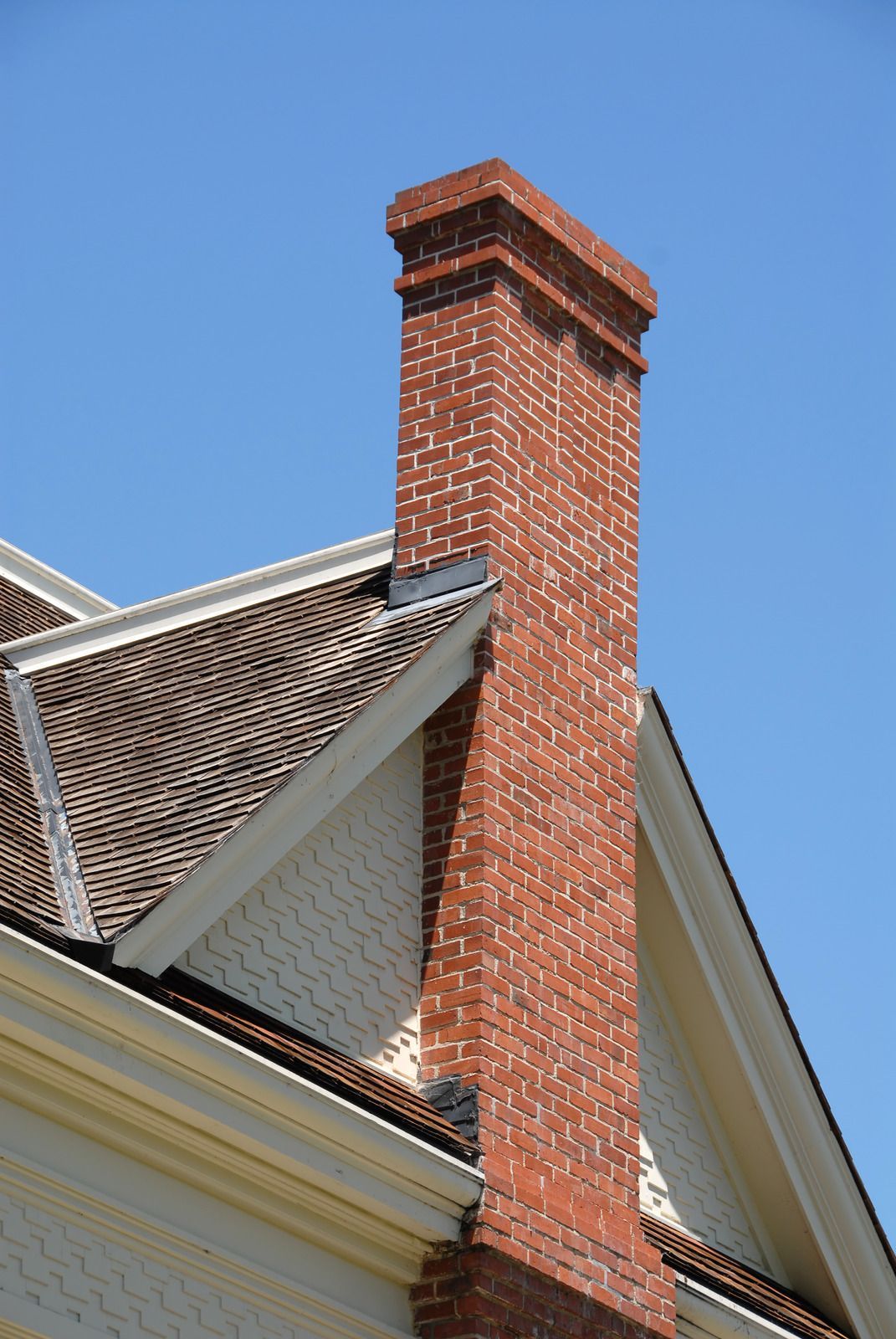
A roof sheds water best when it is an unbroken slope. Every time something penetrates that slope, a vent, a skylight, or a chimney, it creates a seam where water can potentially get in, and the chimney is one of the biggest interruptions of all.
The chimney is a large structure passing straight up through the roof, creating a joint all the way around it where the roofing meets the masonry. Water running down the roof hits that joint, and without a proper seal, it has a path straight in. So the chimney-to-roof connection is inherently a vulnerable spot, which is exactly why it gets special waterproofing: the flashing. When people get a chimney-area leak, it is rarely the shingles in the open field of the roof failing, it is this penetration point, where the roof and chimney meet, that has let go.
That is why a ceiling stain below the chimney points so reliably to the joint around the chimney rather than the roof at large. The water is getting in where the chimney breaks the roof's surface.
What Flashing Is and Why It Fails
Flashing is the system of metal pieces installed at the chimney-to-roof joint to waterproof it. It is what bridges the gap between the roof surface and the chimney, channeling water away from the seam and back onto the roof so it cannot get underneath. Properly installed flashing is what keeps that vulnerable joint watertight.
Like anything exposed to years of weather, flashing fails over time, and a few specific failures cause most chimney leaks:
Corroded or deteriorated flashing
Metal flashing weathers and can corrode or develop holes over the years, opening a path for water.
Flashing that has pulled loose or lifted
Flashing can work loose from the roof or the chimney over time, or be lifted by wind, ice, or settling, breaking the seal and letting water behind it.
Failed sealant or caulk
Where flashing meets the masonry, the seal is often maintained with sealant that dries out, cracks, and fails with age, opening the joint.
Improper original installation
Flashing that was not installed correctly, or was reduced to a smear of caulk instead of proper metal flashing, fails early and leaks.
Deteriorated mortar joint
The point where the flashing tucks into the chimney masonry can fail if the mortar there has eroded.
The common thread is that the waterproof seal at the chimney joint has broken down somewhere, and once it has, rain running down to the chimney gets in and travels into the roof structure and down to the ceiling.
Tip: Notice when the stain appears or grows, it usually shows up or worsens during or right after rain, which confirms a water-entry problem rather than something else. If you can safely see the chimney from the ground or a window, look for obviously rusted, lifted, or loose metal at its base where it meets the roof. Don't climb up to inspect it yourself; note what you can see and when the stain reacts, and share that with a roofer.
Why You Can't Just Patch the Ceiling
When a stain appears, the tempting move is to repaint or patch the ceiling and move on. That hides the symptom while the cause keeps working, and it is exactly the wrong approach.
The stain is the visible end of a leak that starts up at the chimney flashing and travels through the roof and into the ceiling. Painting over it does nothing about the failed flashing, so the next rain sends more water in, and the stain returns, often worse, while the water continues to soak the roof deck, framing, and insulation along the way. Hidden water damage and even mold can develop in the structure between the chimney and the ceiling. So a ceiling patch is not a fix; it is covering up an active leak.
The real fix has to address where the water is getting in, the flashing at the chimney, and stop it there. Only once the leak is sealed does it make sense to repair the ceiling, knowing it will stay clean because the water is no longer coming in.
How a Chimney Flashing Leak Gets Fixed
Because the cause is the failed seal at the chimney joint, the fix is to repair or replace the flashing and properly seal the connection, restoring the waterproofing at that vulnerable point.
Inspect to confirm the source
A roofer examines the chimney flashing and surrounding area to confirm the leak is there and identify exactly what failed, corroded metal, loose or lifted flashing, failed sealant, a bad mortar joint, or poor original installation. Because other things can occasionally leak near a chimney, confirming the source matters.
Repair or replace the flashing
Depending on the condition, the flashing is resealed and secured, or, where it is corroded, poorly installed, or beyond repair, replaced with new, properly installed flashing. Proper metal flashing, correctly integrated with the roofing and tucked into the masonry, is what makes the seal last, rather than a quick bead of caulk.
Seal the joint and masonry properly
The connection to the chimney masonry is sealed correctly, and any deteriorated mortar joint addressed, so the whole joint is watertight.
Check for and address related damage
A roofer also checks whether the leak has damaged the roof deck or surrounding area and addresses it, so the repair is sound.
Then repair the ceiling
With the leak stopped, the interior stain can be repaired knowing it will not come back.
Done this way, the leak is solved at its source, the chimney joint is watertight again, and the ceiling stays clean, rather than the stain reappearing with the next storm.
Warning:
Don't ignore a chimney-area ceiling stain or just paint over it, the water is still getting in and soaking the roof structure between the chimney and the ceiling, where it can rot framing and grow mold out of sight. And don't climb onto the roof to inspect or seal chimney flashing yourself; roof and chimney work is hazardous, and improper sealing (like smearing caulk over failed flashing) often fails fast. A chimney leak is worth a professional roofer's proper diagnosis and repair.
Frequently Asked Questions
Why is there a water stain on my ceiling near the chimney?
Almost always because the flashing, the metal seal where the chimney meets the roof, has failed and is letting rainwater in. The chimney breaks the roof's surface, and flashing waterproofs that joint; when it corrodes, lifts, or its sealant fails, water runs in and travels down to stain the ceiling below.
What is flashing?
Flashing is the metal installed at the chimney-to-roof joint to waterproof it, bridging the gap between the roof and the masonry and channeling water back onto the roof so it can't get underneath. It's what keeps that vulnerable penetration point watertight, and it's the part that usually fails when a chimney leaks.
Why does the chimney leak and not the rest of the roof?
Because the chimney interrupts the roof's surface, creating a seam all the way around it where water can get in. The open field of shingles sheds water fine; it's the penetration points like the chimney that are vulnerable, which is why they get flashing and why that's where leaks usually start.
Can I just paint over the stain?
No. The stain is the end of an active leak starting at the chimney flashing, so painting hides the symptom while water keeps coming in, soaking the roof deck, framing, and insulation and risking rot and mold. The flashing has to be fixed first; then the ceiling can be repaired so it stays clean.
How is a chimney flashing leak fixed?
A roofer confirms the source, then repairs or replaces the flashing, resealing and resecuring it or installing new properly integrated flashing, and seals the joint and any deteriorated mortar. Related roof-deck damage is addressed, and once the leak is stopped, the ceiling stain is repaired knowing it won't return.
How urgent is a chimney leak?
Worth addressing promptly. While the flashing leaks, every rain sends more water into the roof structure, where hidden rot and mold can develop between the chimney and the ceiling. Catching it early keeps the repair to the flashing and a ceiling patch rather than letting it become structural damage.
Will insurance be involved in a chimney leak repair?
That depends entirely on your policy and the cause, and it's a question for your insurer, not something to assume either way. The priority regardless is stopping the leak at the flashing before more water damages the roof structure, so the situation doesn't worsen while details are sorted out.
Stopping the Leak at Its Source
A water stain on the ceiling below the chimney is the visible end of a leak that almost always starts at the flashing, the seal where the chimney breaks through the roof. The chimney is a leak-prone spot by nature, and when its flashing corrodes, lifts, or loses its sealant, rain finds the way in. Patching the ceiling only hides an active leak that keeps soaking the structure; the real fix is repairing or replacing the flashing so the joint is watertight again. Address it at the chimney, and the stain stays gone for good.
Fix the chimney leak at the flashing, not just the ceiling — A stain below the chimney means the flashing has failed and water is getting into your roof, and painting over it just hides an active leak that keeps soaking the structure. With 20
years of experience, Chimney Rock Roofing & Construction, LLC
diagnoses and repairs chimney flashing leaks for homes across Dayton, Beavercreek, and Centerville, Ohio, sealing the joint properly so the water stops and the ceiling stays clean. Reach out for a
roof repair and chimney inspection to stop the leak at its source.